
Culture & History
Timgad: A Roman City in the Aurès
Timgad’s street grid, public buildings, inscriptions, expansion, and later Christian heritage explain the evolution of a Roman city in North Africa.
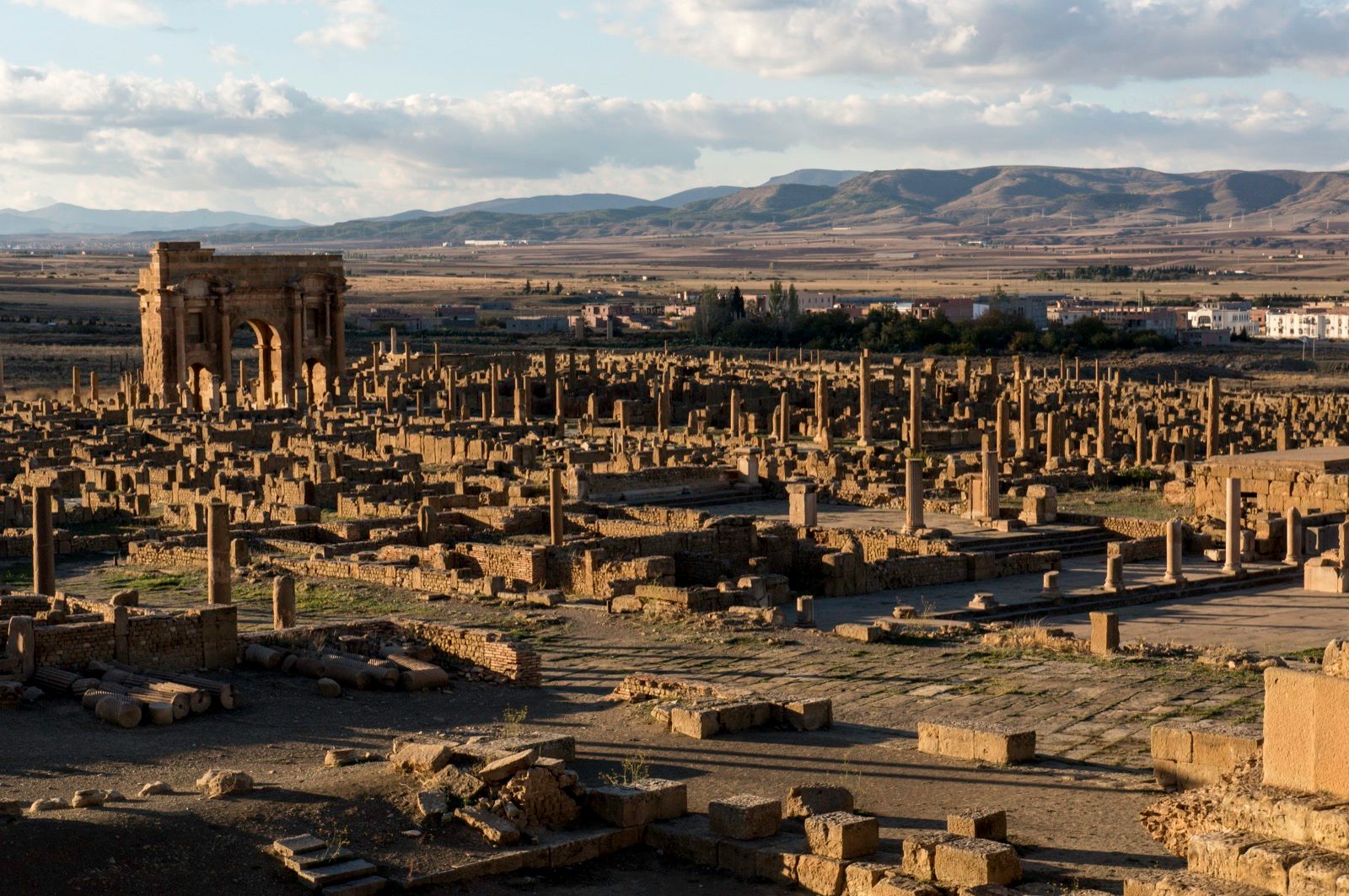
Timgad was founded under Trajan around AD 100. The original settlement was organised by the cardo and decumanus, with public space and services arranged through a clear urban grid.
Beyond the textbook grid
The city expanded outside its first limits. Houses, markets, baths, religious buildings, and later districts show adaptation to population, economy, and changing institutions.
Public culture and literacy
Theatre, inscriptions, and the remains traditionally identified as a public library offer evidence for civic life and education, while surviving texts help archaeologists reconstruct institutions and individual careers.
Late antiquity and preservation
Christian buildings and later occupation complicate the idea of a purely high-imperial city. Modern exposure makes the plan legible but also increases vulnerability to weather and foot traffic.